WHA
Resolution
on skin Diseases
addressing the need for global public health priority of skin diseases
The World Health Assembly Resolution on “Skin diseases as a global public health priority” was adopted in May 2025.
Côte d’ Ivoire, together with Nigeria, Togo, Micronesia, China, Egypt and Colombia led the initiative to place skin diseases firmly on the global public health agenda and proposed the Skin Diseases Resolution for adoption by the WHA.
The World Skin Health Coalition and its partners joined many other organizations to call for its adoption which represents an overdue recognition of the immense burden that skin diseases place on individuals, communities, and health systems worldwide.
Read the May 2025 Press Release Here
From adoption to action
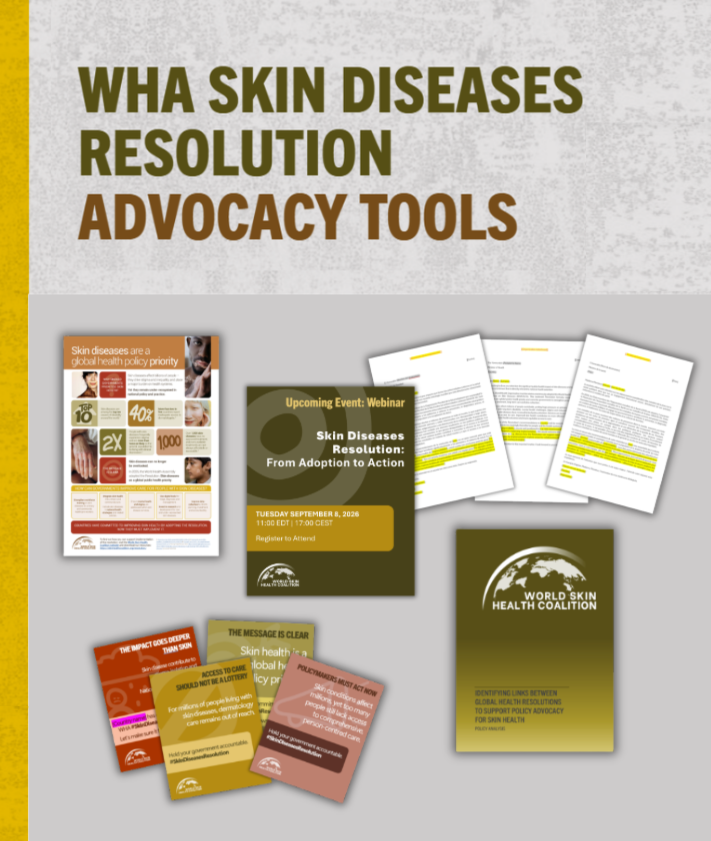
Explore our new resources that can support your advocacy work to leverage the Resolution, push for implementation in your country and drive meaningful change in policy and practice.
The adoption of the Resolution is only the beginning — implementation is now our priority.
The impact of this Resolution will be measured not in words, but in action at national and regional levels. We must mobilize governments and policymakers to recognize both the significance of the Resolution and the commitment made, as Member States, to deliver on it. Sustained advocacy and collective action are essential to maintain momentum and translate this global mandate into concrete national policies and programmes.
Civil society has a critical role to play in partnering, guiding and holding decision-makers accountable to ensure skin diseases are addressed as the public health priority.
Click below to download our Information Document, which explains the Resolution in clear, practical terms and supports your advocacy efforts. Below, under Resources, are other ways that you can contribute to this global movement.
the full spectrum
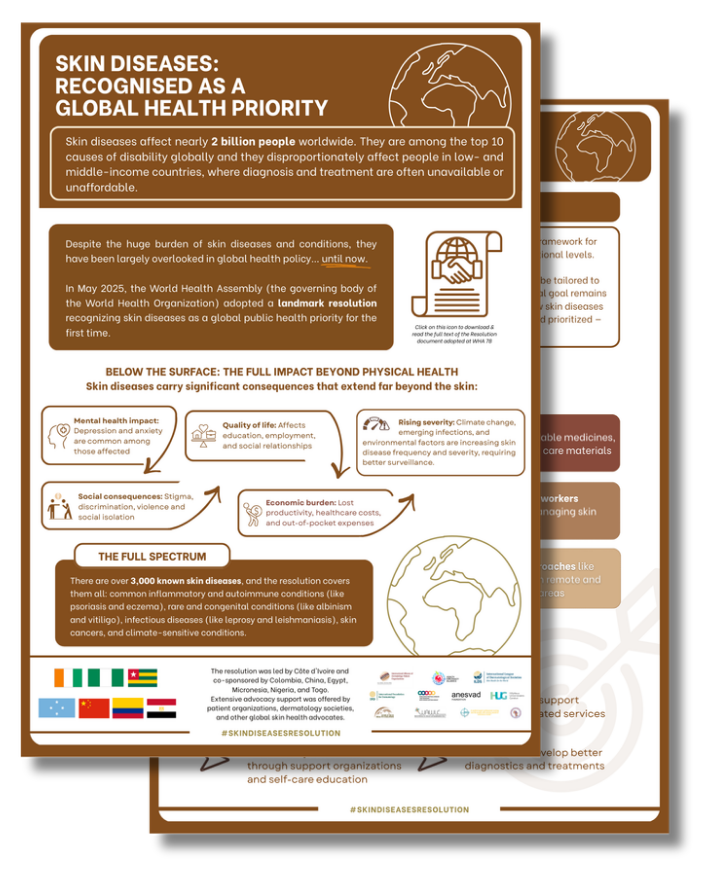
Skin diseases affect individuals of all ages and are one of the most common reasons for seeking medical help, impacting an estimated 4.69 million people globally each year. Yet, they remain disproportionately neglected in national and global health priorities. The consequences extend beyond physical suffering, with social stigma, mental health impacts, and lost productivity exacerbating inequalities, particularly in low- and middle-income countries.
There are over 3,000 known skin diseases, and the resolution covers them all: common inflammatory and autoimmune conditions (like psoriasis and eczema), rare and congenital conditions (like albinism and vitiligo), infectious diseases (like leprosy and leishmaniasis), skin cancers, and climate-sensitive conditions.
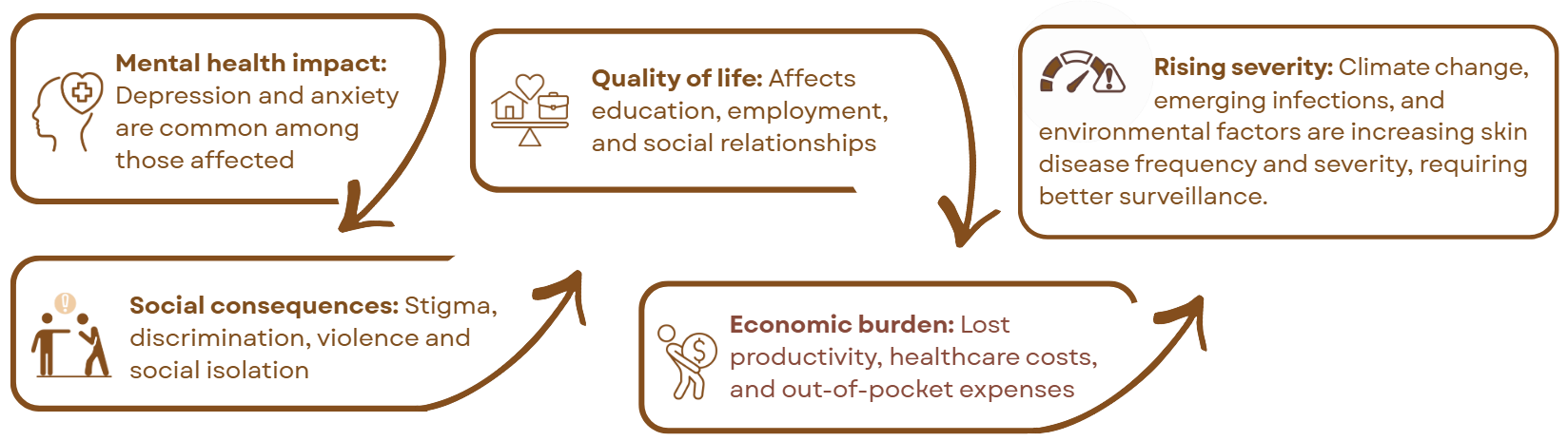
BELOW THE SURFACE: THE FULL IMPACT BEYOND PHYSICAL HEALTH
Skin diseases carry significant consequences that extend far beyond the skin:
What will a WHA skin resolution on skin diseases achieve?
What will the resolution achieve?
This resolution recognizes that skin health is essential for overall health and wellbeing.
Skin is our largest organ and our first line of defense against disease. When skin health is compromised, it affects every aspect of a person’s life.
This resolution provides a framework for change at regional and national levels.
While implementation will be tailored to local contexts, the universal goal remains the same: to transform how skin diseases are recognized, treated, and prioritized – no matter where you live.
What actions must member states take?
Through the Resolution, Member States are called upon to:
- Integrate skin health into universal health coverage policies and national health programs
- Strengthen primary healthcare so local health teams can diagnose and treat common skin conditions
- Improve access to affordable medicines, diagnostics, and wound care materials
- Train healthcare workers in identifying and managing skin diseases
- Strengthen surveillance, data collection, and diagnostic capacity to understand the true burden of skin diseases
- Use innovative approaches like telemedicine to reach remote and under-served areas
The resolution focuses on key areas and tackles essential issues including:
- Stigma and discrimination against people with skin diseases
- Mental health support through integrated services
- Patient empowerment through support organizations and self-care education
- Research to develop better diagnostics and treatments
What is the Global Action Plan (GAP)?
The Resolutions asked the WHO to develop a Global Action Plan (GAP) on Skin Diseases, in consultation with Member States & Stakeholders, to be submitted to WHA80 in May 2027.
The Global Action Plan will:
- Set clear goals and targets for improving skin health worldwide
- Guide national strategies and programs
- Coordinate efforts across countries and organizations in all WHO regions
- Ensure patient organizations shape policies and programs at national level
- Track progress through regular reporting to WHO
A Global Action Plan is the WHO’s strategic framework that brings countries, organizations, and stakeholders together around a coordinated strategy. It sets shared targets, defines roles for countries and partners, and establishes metrics to track progress and accountability.
Building the Plan Together:
The GAP will be developed through public consultations with Member
States, civil society, and relevant stakeholders over a two-year period. This inclusive process ensures:
- Priorities and success indicators are influenced by lived experience and real-world needs, especially from under-represented communities
- Regional and national adoption is strengthened through early engagement
- The strategy advances equity and universal health coverage goals
How does the GAP guide national action plans?
Member States will translate the Global Action Plan’s strategic framework into national action, adapting global guidance to their specific contexts:
- Develop or revise national plans for skin disease prevention and treatment
- Build capacity in healthcare workforce training
- Provide self-care education to empower patients and families in managing their conditions
- Strengthen diagnostic and surveillance systems
- Conduct research on environmental and climate factors affecting skin health
- Implement sustainable prevention strategies, including access to water, sanitation and hygiene, and One Health approaches to reduce disease transmission
Resources
Click here (COMING SOON) to consult our Advocacy Toolkit and the many other resources to support your Call for Action!
CALL TO ACTION
LOOKING AT THE BIGGER PICTURE
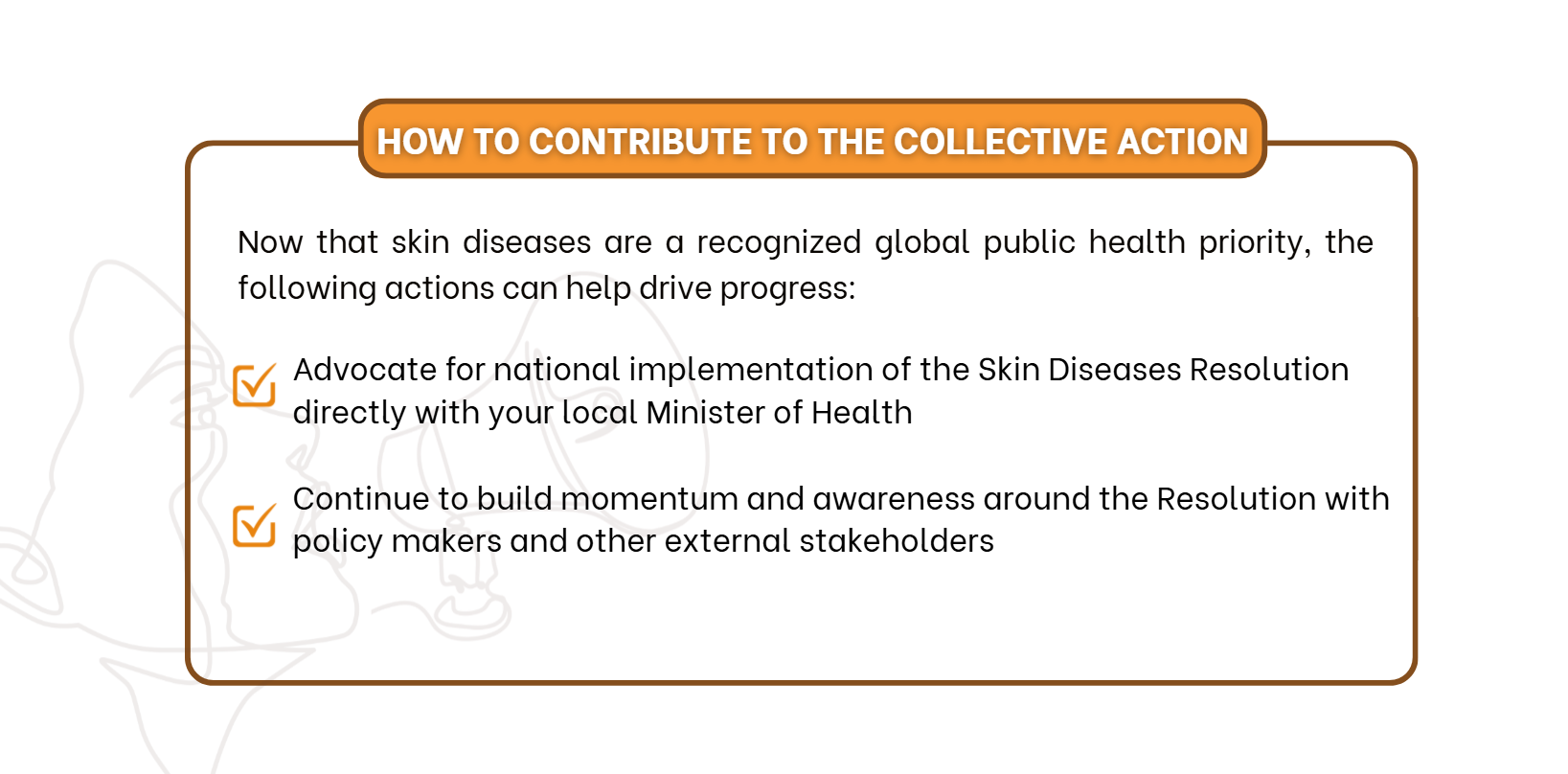
Addressing skin diseases globally requires collective action. The resolution calls on governments, international organizations, healthcare professionals, civil society, research institutions, and the private sector to increase awareness of skin diseases as a public health issue, reduce stigma, improve access to care, and support.
- Send letters explaining the impact of skin diseases and the importance of the WHA Resolution in your country.
- Provide country-specific data to emphasize local relevance.
- Ask for a meeting with the Minster to discuss your local experiences.

- Use hashtags such as #SkinDiseasesResolution,
#SkinHealthForAll, and #GlobalHealth. - Share infographics and videos with key statistics and patient stories supporting your local circumstances.
-
Share testimonials from patients and caregivers in your country to humanize the burden of skin diseases.
-
Raise awareness about your condition in your country, through using the media, using your network and call attention to the issues with a Call To Action of getting your national Health Ministry to support the implementation of the WHA Resolution.
-
Ask your patient community to participate and spread the word!
Sign up to our Newsletter here to receive timely updates!
For more information, please contact info@skinhealthcoalition.org